


Healthy Delivery Guarantee
50+ Years Helping Communities Grow
Every Purchase Supports Our Mission
Apply coupon code GROW15 to save 15% on your nursery order and get a jump on spring.


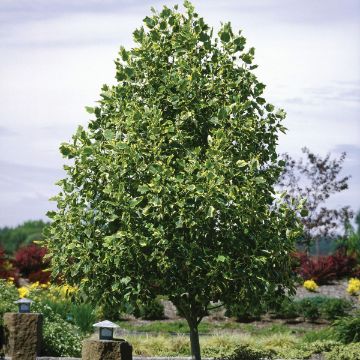


The hardy and adaptable Blackhaw Viburnum is a great addition to any landscape or naturalized area. This shrub or small tree is native to eastern North America and is considered a high-value wildlife plant. It features glossy, dark green leaves that turn shades of red and purple in the fall. In the spring, it displays clusters of creamy white flowers, while in the late summer, it will produce dark purplish-black berries – edible to humans and wildlife.

The redosier dogwood is loved by gardeners, landscapers, and homeowners for its hardiness and versatility. It can grow in a myriad of conditions, including wet soil. Its thicket-forming habit makes it a great hedge option. And the fibrous root sytem provides effective errosion control on banks and slopes.

Spectacular flowers in shades of lilac, light purple, or lavender make this old-time lilac a garden favorite. The long-lasting flower clusters bloom in April or May and are framed with lush green foliage. Their nostalgic fragrance adds to the "coming of spring." The lilac is an extremely hardy shrub and can be used as an individual specimen plant, informal hedge, shrub border, windbreak, or screen.

The Spicebush is an aromatic beauty great for shrub borders, native gardens, and woodlands. When the leaves and twigs of a Spicebush are crushed, they release a spicy, citrus-like scent. Its oval leaves turn to a stunning golden yellow in the fall. Beginning in early spring, clusters of small, yellow flowers emerge. On female plants, bright red berries appear later in the spring season – an important food source for birds and other wildlife.

This compact landscape tree is a spring star, with abundant clusters of fragrant white flowers making their appearance in May. Its dense, spreading crown and zigzagging branches add to the appeal, often making the tree wider than it is tall. Because of its size, the Sargent crabapple is useful for planting under utility lines, in confined yards, as privacy screens and hedges and on sloping ground. It is also a popular choice for bonsai.

The Black Hills spruce is a variety of the more widespread white spruce found naturally only in southwest South Dakota and a small portion of northeast Wyoming. While not as widely known as other spruces, this ornamental spruce can be planted just about anywhere that the more common Colorado spruce will grow.

One of our most popular ornamental conifers, the Colorado Blue Spruce is a truly magnificent sight. Its silvery blue-green coloring and perfect Christmas tree shape make this tree a great landscaping focal point on commercial and residential properties. It is also widely used for privacy or a windbreak.

The bur oak is a mighty sight to behold. A coarsely textured crown, wild and wooly acorns and a massive trunk with rough and deeply furrowed bark combine to make one impressive tree. Those characteristics helped this oak survive the elements of its wide-reaching natural range. In fact, the natural bur oak range is the northern- and western- most of all the eastern oak species.

The eastern white pine has played a very important role throughout the history of America. In colonial days, the best of the trees were set apart by the king for masts on British ships. Today it is still a valuable commercial tree but also favored in parks and spacious yards—both for its beauty and its fast growth. It has also been named the state tree of both Maine and Michigan.

The northern red oak has been called “one of the handsomest, cleanest, and stateliest trees in North America” by naturalist Joseph S. Illick, and it is widely considered a national treasure. It is valued for its versatility and hardiness in urban settings. This medium to large tree is also known for its brilliant fall color, great value to wildlife, and status as the state tree of New Jersey.




By subscribing I confirm that I would like to receive email updates from the Arbor Day Foundation. The Arbor Day Foundation stores your information safely and securely. See our Privacy Policy for details on how we use information. This site is protected by reCAPTCHA.

